Celebrating Black History

During the DA morning announcements for the month of February, we are celebrating historical figures that made an impact on Black History.

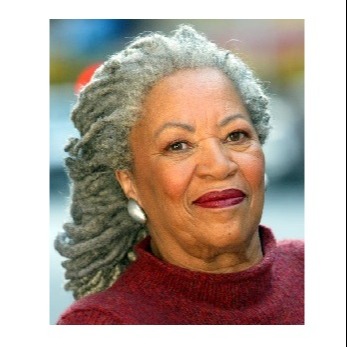
Toni Morrison

Toni Morrison: Nobel Prize-winning Novelist, Editor, Professor and a Trailblazer Who Forever Changed Literature

Toni Morrison was born Chloe Ardelia Wofford in 1931 in Lorain, Ohio. Growing up in a working-class family, she developed a love for reading, storytelling, and music at an early age. She excelled in school, studied English at Howard University, and earned a master’s degree from Cornell University.

Morrison became well known not only for her extraordinary novels, but also for the way she centered Black voices and experiences at a time when mainstream publishing rarely allowed them space. Her writing is known for its beautiful language, deep emotion, and unforgettable characters. Some of her most famous works include: Beloved – winner of the Pulitzer Prize, The Bluest Eye, Sula, and Song of Solomon – winner of the National Book Critics Circle Award

In 1993, Toni Morrison made history as the first Black woman to win the Nobel Prize in Literature—one of the highest honors any writer can receive. But Morrison didn’t just write books—she also shaped the world of literature from the inside. As an editor at Random House, she helped bring Black authors and Black stories into the spotlight, publishing works by Angela Davis, Muhammad Ali, Toni Cade Bambara, and many others. Through her editing and writing, she played a major role in building the modern canon of Black American literature.

Later in life, Morrison became a professor at Princeton university, inspiring a new generation of writers and thinkers. Even after gaining global recognition, she continued to speak boldly about storytelling, identity, racism, and the importance of protecting creative freedom.

Toni Morrison passed away in 2019 at the age of 88, but her legacy continues to influence authors, classrooms, and readers around the world. Her books are studied in schools, adapted into films and plays, and celebrated for their beauty, honesty, and power. Toni Morrison showed us that words matter—and that telling our stories can shape history.

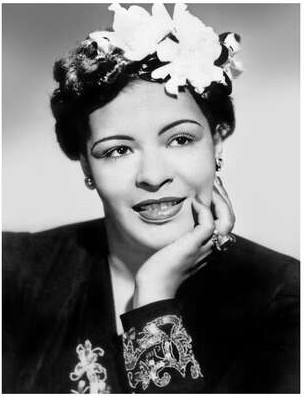
Billie Holiday

Billie Holiday: Jazz Singer, Lyricist, Activist

Billie Holiday was born in 1915 in Philadelphia and grew up in Baltimore during the height of the jazz era. Even though she never had formal music training or learned to read music, she had a natural gift for phrasing, rhythm, and emotion. By the time she moved to New York City as a teenager, she was already performing in Harlem nightclubs and catching the attention of major musicians.

Holiday changed what it meant to be a singer. Instead of just performing notes on a page, she transformed songs into deeply personal stories. Her voice—smooth, emotional, and instantly recognizable—made her one of the most important jazz artists of all time.

In the 1930s and 1940s, Holiday recorded some of her biggest hits, worked with legends like Count Basie and Louis Armstrong, and became the first Black woman to perform with an all-white orchestra. But one of her boldest and most important moments came with the song “Strange Fruit,” a haunting protest to the lynching of African Americans in the South. At a time when speaking out could cost careers—or

lives—Holiday performed it anyway. Many historians consider it the first major protest song of the Civil Rights era.

Throughout her career, she also wrote unforgettable classics like “God Bless the Child,” which became part of the Great American Songbook. Holiday’s signature look. especially the white gardenias she wore in her hair, became iconic.

Despite facing racism, discrimination, and many personal struggles, Billie Holiday continued to share her art with courage and honesty. She passed away in 1959 at just 44 years old, but her influence lives on through books, films, awards, and generations of musicians who credit her as a major inspiration.

Today, Billie Holiday is remembered not only for her groundbreaking music, but also for her strength, creativity, and willingness to use her voice to confront injustice.

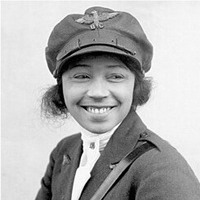
Bessie Coleman in front of a plan

Bessie Coleman: Trailblazing Aviator Broke Barriers in the Sky and on the Ground

Bessie Coleman was born in 1892 in Waxahachie, Texas, during the Jim Crow era. Despite these challenges, she grew up determined, hardworking, and known for her strong academic skills.

After moving to Chicago as a young woman, Bessie became fascinated with the idea of flying. But every aviation school in the United States rejected her because she was both Black and female. Instead of giving up, she took French classes, saved money, and traveled to France. In 1921, she made history by becoming the first American woman to earn an international pilot’s license—and the first Black woman in the world to become a licensed pilot.

When she returned to the United States, Coleman became famous for performing daring stunts in air shows. Crowds loved her fearless flying, and she used her platform to inspire young people and push for equality. She refused to perform at any event that discriminated against African Americans, even when it meant losing money.

Bessie Coleman also has a special connection to Jacksonville. In 1926, while practicing for an airshow at Paxon Airfield, a mechanical failure caused a tragic accident that took her life. Today, the site is home to Paxon School for Advanced Studies, which proudly displays a memorial honoring her legacy.

Coleman spent her life proving that no barrier, whether gender, race, or poverty, could stop her from achieving her dreams. Her goal was to open a flight school for African Americans, giving others the opportunities she never had.

Her courage, resilience, and groundbreaking achievements continue to inspire students, aviators, and dreamers around the world.  Bessie Coleman once said: “I made up my mind to try. I tried and was successful.

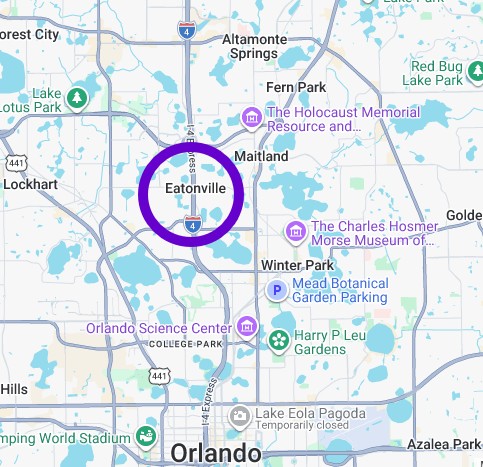
Where is Eatonville

Eatonville, Florida

Founded, Incorporated, and Governed Entirely by African Americans

Eatonville was officially incorporated in 1887, at a time when formerly enslaved people were fighting for basic rights, land ownership, and opportunities. Its creation was a major accomplishment. It oƯered Black families a chance to lead, to own property, and to shape a community on their own terms during a period when racism and restrictive laws made progress extremely difficult.

Eatonville is also known worldwide as the hometown of Zora Neale Hurston, one of the most influential African American writers in history. Her childhood in Eatonville inspired much of her work, allowing her to share Black stories, culture, and traditions with a global audience.

In its early years, Eatonville thrived with Black-owned businesses, churches, family farms, and one of the region’s top schools for Black students—the Robert Hungerford Industrial School. The community became a symbol of self-determination and pride, showing what Black Americans could build despite the obstacles of the time.

Today, Eatonville remains a historic landmark and cultural center. Visitors can explore the Zora Neale Hurston Museum and take part in the annual Zora! Festival, a major celebration of African American art, literature, and heritage. Eatonville’s story reminds us that leadership, unity, and resilience can create lasting change—no matter the challenges.

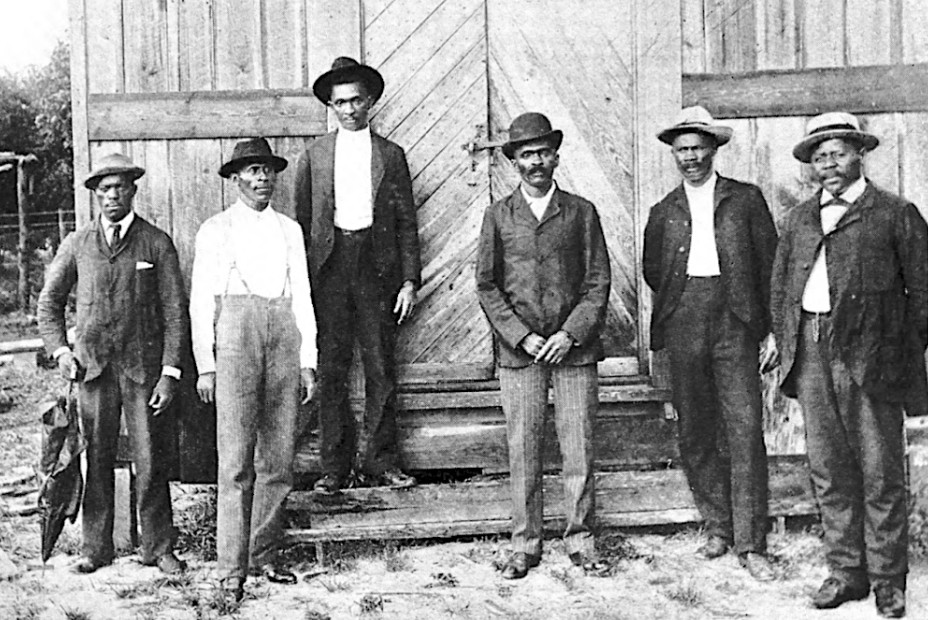
City Council - 1907

City councilmen of 1907

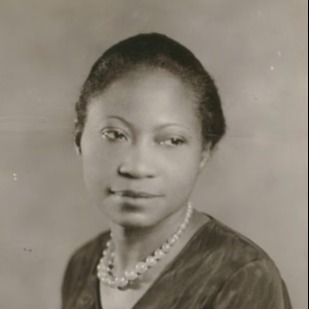
Augusta Savage - courtesy of The Guardian

Augusta Savage.

Augusta Savage was a groundbreaking sculptor and art teacher from Green Cove Springs, Florida, who overcame poverty, racism, and sexism to become one of the most important artists of the Harlem Renaissance. Even though her parents discouraged her from making art, Savage kept creating and eventually won a prize at a county fair that helped send her to New York to study.

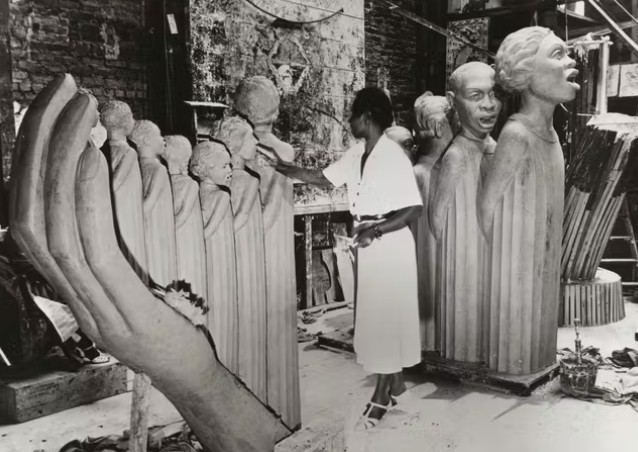
In Harlem, Savage became a well-known sculptress because she centered Black life and culture in her work. Savage opened the first gallery dedicated to Black art, taught more than 2,500 students for free, and mentored future famous artists like Jacob Lawrence and Romare Bearden. Her most famous piece, Lift Every Voice and Sing—a 16-foot sculpture inspired by the Black National Anthem—was created for the 1939 World’s Fair and seen by millions. Although the sculpture was later destroyed, a visual replica can be seen on a building on Hogan Street in downtown Jacksonville.

Augusta Savage is remembered as a fearless artist, educator, and activist who fought for Black artists to be seen, valued, and included in the art world.

"Lift Every Voice and Sing " Sculpture  Image from the New York Public Library

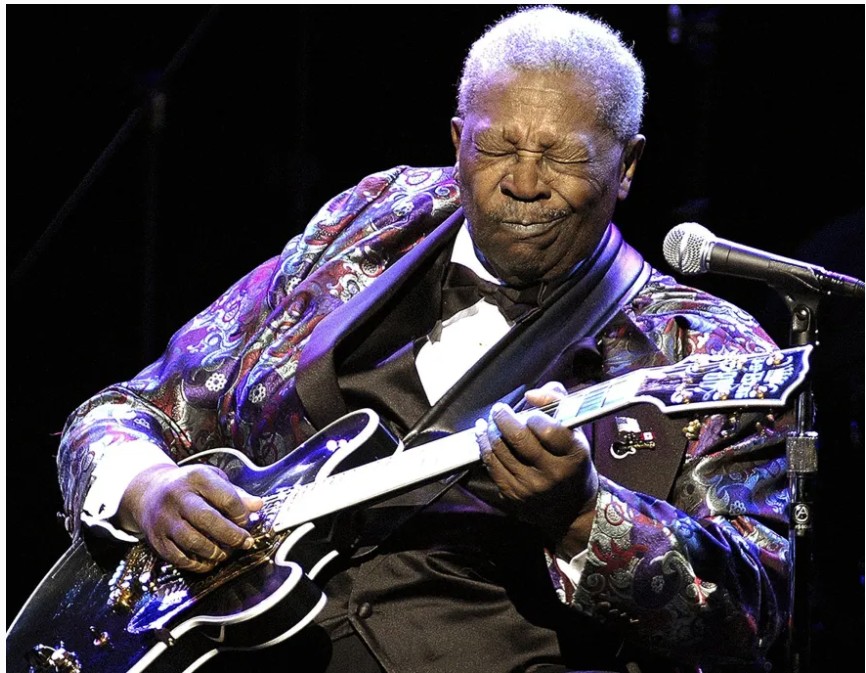
BB King (credit Chicago Times)

B.B. King

B.B. King, who was born Riley B. King in 1925 in the small town of Itta Bena, Mississippi, in the Mississippi Delta.

Despite the hardships of his early life, including losing his mother and grandmother at a young age, King found comfort and purpose in music. King learned guitar from a local minister and began performing on street corners for spare change, slowly building the skills that would one day make him a legend.

As a teenager, King hitchhiked to Memphis, a major center for Black music, where his career truly began. A radio spot on WDIA gave King his first big break, and by the early 1950s he was recording hits like “Three O’ Clock Blues,” which launched him into national touring.

Fame for King exploded in the late 1960s when rock musicians such as Eric Clapton and Buddy Guy praised him as a major influence.

In 1969 King’s hit “The Thrill Is Gone” became a crossover success, introducing millions of new listeners to the blues. King was known for his signature guitar style—full of bending notes, emotional vibrato, and soulful phrasing—which became instantly recognizable and inspired generations of musicians.

King performed around the world, from Europe to Africa to Japan, spreading American blues across the globe. King earned numerous awards, including multiple Grammys, the Presidential Medal of Arts, and inductions into both the Blues Foundation Hall of Fame and the Rock & Roll Hall of Fame.

When B.B. King passed away in 2015 at age 89, he left behind a legacy as the “King of the Blues”

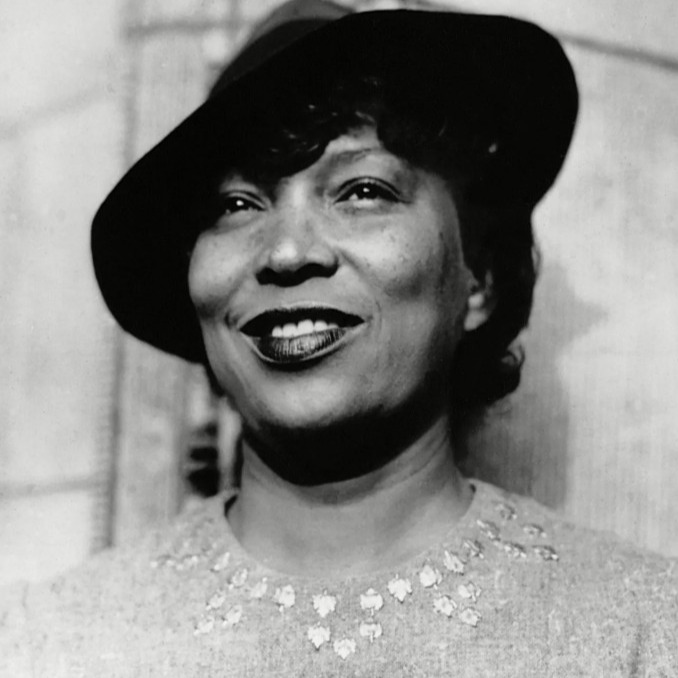
Zora Neale Hurston

Zora Neale Hurston

Zora Neale Hurston who was a trailblazing writer and anthropologist who celebrated Black life in the American South.

Born in 1891 and raised in Eatonville, Florida, Hurston went on to study at Howard University and Barnard College, becoming an important voice in the Harlem Renaissance. Hurston collected Black stories and folklore, traveled to the Caribbean for research, and wrote famous books like Their Eyes Were Watching God.

Hurston spent a lot of time traveling through Florida gathering stories and often visited St. Augustine. She once described St. Augustine as “a quiet place to sit down and write. While there, she finished her autobiography Dust Tracks on a Road, taught at Florida Memorial College, and became friends with author Marjorie Kinnan Rawlings.

Today, Zora Neale Hurston is remembered as one of the most influential writers of the 20th century.

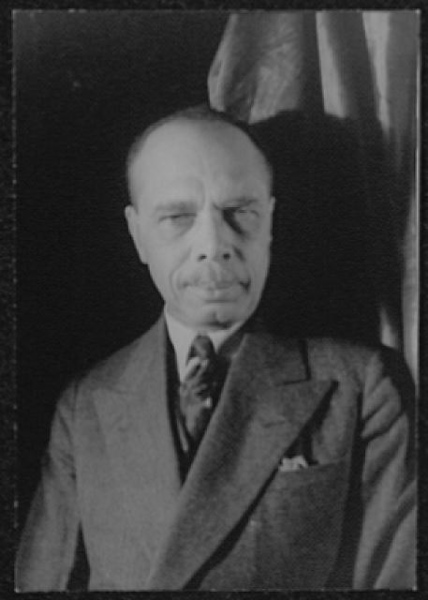
James Weldon Johnson (Image courtesy of the Library of Congress)

James Weldon Johnson

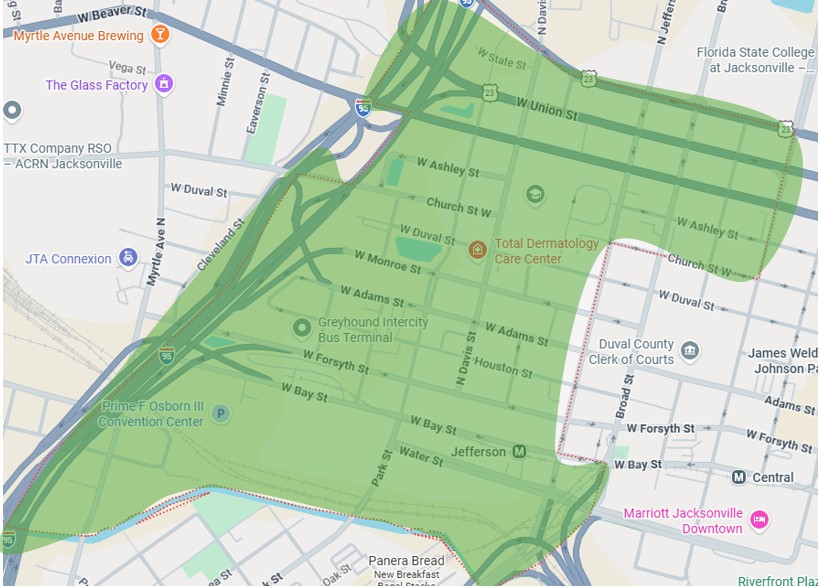
The LaVilla neighborhood in Jacksonville is the birthplace of one of the city’s most accomplished figures: James Weldon Johnson.

Mr. Johnson achieved many firsts in his life:

He became Florida’s first African American lawyer after Reconstruction and later served as the principal of Stanton High School, where he helped turn it into the state's first Black public high school.

He also worked internationally as a U.S. Consul in Venezuela and Nicaragua, and he eventually became the first African American leader of the NAACP.

In addition to his leadership roles, he was a respected college professor and a talented writer.

He became an important voice during the Harlem Renaissance.

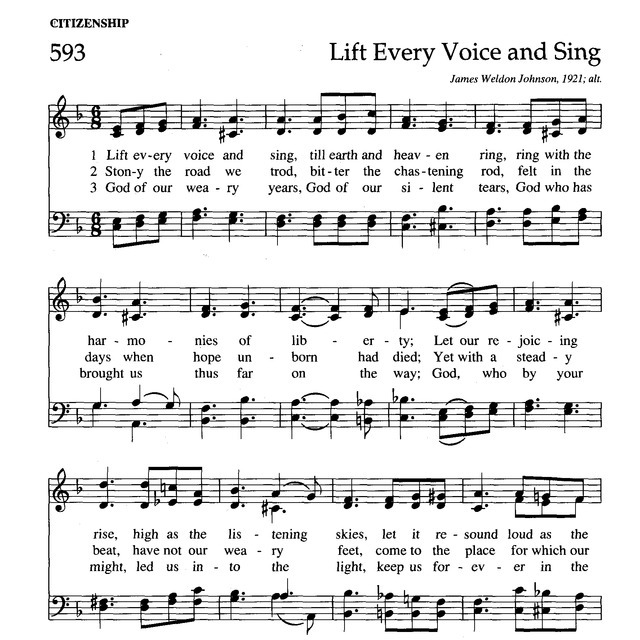
  • His most famous work, the poem “Lift Ev’ry Voice and Sing,” was first performed at the Historic Stanton School on February 12th, 1900.

  • Today, Lift Ev’ry Voice and Sing, is known as the Black National Anthem.

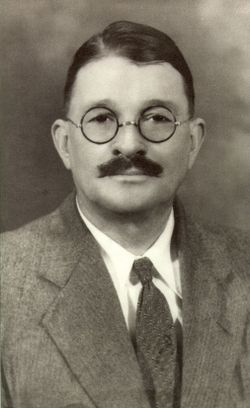
Douglas Anderson

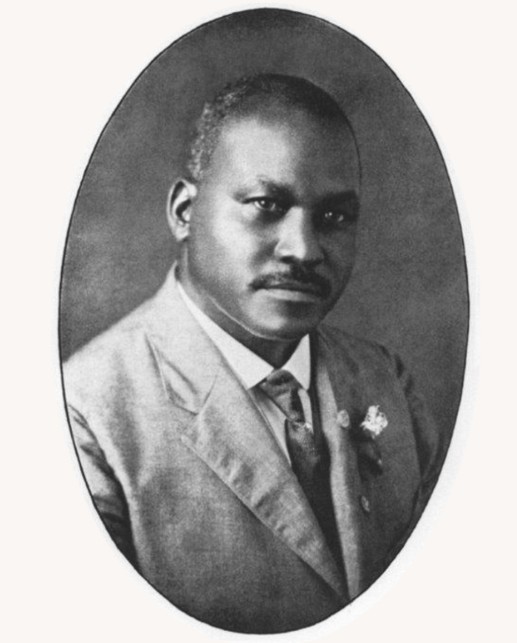
As we celebrate Black History Month, today we honor the man whose name our school proudly bears: Douglas Anderson, a local civil rights leader whose quiet determination changed the course of education in Jacksonville.

Douglas Anderson believed that access to education is a civil right. In the early 1900s, when segregation limited opportunities for Black children, many students on Jacksonville’s Southside had no safe or reliable way to get to school. Rather than accept this injustice, Mr. Anderson took action. He personally transported children to school, often making multiple trips each day, ensuring they could learn, grow, and dream.

His advocacy led the Duval County School Board to establish free transportation for Black students, a groundbreaking step at the time. He also played a key role in securing and supporting the school that would become South Jacksonville School No. 107, the only public school serving Black students on the Southside. After his passing in 1936, the community honored his legacy by renaming the school Douglas Anderson School.

Additionally, when visiting the school today, one can find a Civil Rights Memorial Landmark outside the front entrance. This landmark summarizes the school’s journey and Douglas Anderson’s impact on the Jacksonville community, and commemorates his efforts to fight for this change.

Mr. Anderson’s work reminds us that civil rights leadership doesn’t always happen on a national stage. Sometimes it begins with one person seeing a need, standing up for children, and refusing to let barriers define their future.

  • Today, as artists, scholars, and leaders, we carry forward his legacy every time we use our talents to uplift others, speak truth, and pursue excellence.

  • Let us remember Douglas Anderson not just as a name on our building, but as a symbol of service, courage, and the power of education to change lives.

Douglas Anderson 1883-1936